
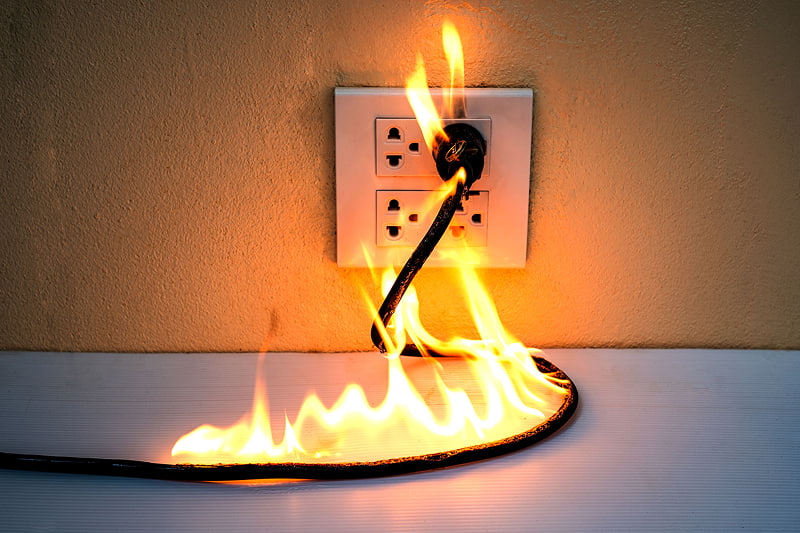
Picture this. It is 2am in a five-bedroom shared house. Someone has left a pan on the hob in the shared kitchen, and smoke is starting to drift into the hallway. What happens in the next three minutes depends on decisions the landlord made months earlier. Does an alarm sound in every bedroom? Does the kitchen door close by itself? Is the route to the front door clear?
These questions sit at the heart of HMO fire regulations. Houses in multiple occupation carry more risk than ordinary homes, so the law asks more of the people who run them. Councils inspect against these rules, fire services enforce them, and insurers look closely at them after a loss.
This guide covers the four areas that matter most: fire alarms, fire doors, escape routes and your written fire risk assessment. It also explains how gaps in compliance can affect a fire claim, which is the part many landlords only discover when it is too late.
The rules below apply in England. Your local council may set its own standards on top, so always check them before making changes.
Why HMOs Face Stricter Fire Rules
An HMO is home to several people who do not form one household. They cook separately, keep different hours and often do not know each other well. That mix brings more cookers, more chargers and more chances for something to go wrong.
Government-commissioned research found that people living in HMOs face around six times the risk of dying in a fire compared with people in a single family home. In HMOs of three storeys or more, the risk was far higher. Councils still quote these findings today.
That is why HMO landlords cannot rely on the basic rules that apply to an ordinary buy-to-let.
The Law Behind HMO Fire Regulations
There is no single HMO fire law. Instead, several pieces of law and guidance work together.
Housing Act 2004 and the management regulations
Councils use the Housing Health and Safety Rating System, set up under the Housing Act 2004, to judge fire risk in any home. On top of this, the Management of Houses in Multiple Occupation (England) Regulations 2006 place direct duties on whoever manages the HMO.
The manager must keep escape routes clear and in good repair, keep fire alarms and firefighting equipment working, and display fire escape notices where tenants can see them.
The Fire Safety Order and shared areas
The Regulatory Reform (Fire Safety) Order 2005 covers the shared parts of an HMO, such as hallways, landings and stairs. It makes the landlord, as the responsible person, carry out a fire risk assessment and act on what it finds.
LACORS guidance as the council benchmark
Most councils measure HMOs against national guidance published by LACORS in 2008. It is not law in itself, but following it will normally satisfy both the Housing Act and the Fire Safety Order. Many councils publish their own versions with local changes, so the exact standard can vary from one borough to the next.
Fire Alarms: More Than a Smoke Alarm on Each Floor
Every rented home in England must have at least one working smoke alarm on each storey with living accommodation. A carbon monoxide alarm is also needed in any room with a fixed combustion appliance, such as a boiler or wood burner. Gas cookers are excluded.
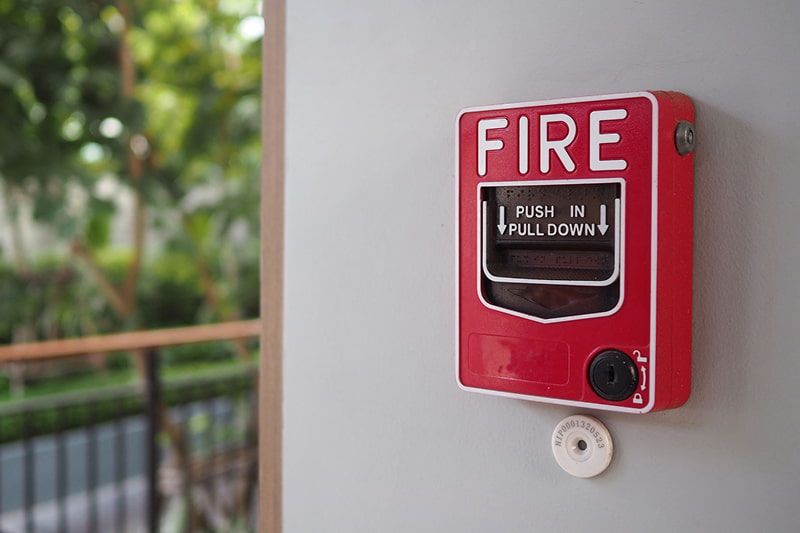
In an HMO, that is only the starting point. The guidance expects a system that warns everyone in the building, wherever the fire starts. In practice, that usually means:
- Mains-wired, interlinked alarms, so one alarm sets them all off
- A heat detector in the kitchen, where a smoke alarm would trigger false alarms
- Detectors along the hallways and landings that form the escape route
- A more advanced, panel-controlled system in bedsit-style HMOs and larger properties
The right system depends on the layout. A two-storey shared house typically needs a simpler set-up than a four-storey house let as bedsits. Whatever you have, test it regularly, keep a log and fix faults quickly.
Fire Doors: The Detail Inspectors Check First
Fire doors hold back fire and smoke long enough for people to get out. The standard door in most HMOs is an FD30, which resists fire for 30 minutes. An FD30S also has smoke seals.
Where fire doors are needed, typically on the kitchen and on rooms opening onto the escape route, inspectors look for:
- A working self-closing device that pulls the door fully shut
- Intumescent strips, which expand in heat to seal the gap
- Fire-rated hinges and a suitable frame
- Even gaps around the door, usually no more than 3mm
- No damage, holes or wedges
Smaller two-storey shared houses may not need fire doors on every bedroom, but councils still expect solid, well-fitting doors. Hollow or thin-panelled doors on an escape route will not pass.
The most common failure is simple. Tenants prop fire doors open, or a self-closer breaks and nobody reports it. Regular checks catch both.
If your HMO sits in a building with two or more flats and shared areas, you must also give residents information about why fire doors matter. In buildings over 11 metres tall, communal fire doors must be checked at least every three months.
Escape Routes: A Clear Path to Safety
The escape route is the path from each room to the outside, usually down the stairs and out through the front door. In most HMOs, this route must be protected, meaning the walls, ceilings and doors around it hold back fire for at least 30 minutes.
To keep the route working:
- Keep hallways and stairs free of bikes, bins and furniture
- Fit locks that open from the inside without a key, such as thumb-turn locks
- Display clear escape notices where your council requires them
- Provide a fire blanket in shared kitchens
The route should lead to a place of ultimate safety, far enough from the building to be out of danger. A rear garden only counts if it is at least as long as the house is tall.
Your Fire Risk Assessment Must Be Written Down
Since 1 October 2023, every responsible person must record their fire risk assessment in full, along with their fire safety arrangements. The old exemption that let some smaller landlords skip a written record has gone.
A good HMO fire risk assessment identifies hazards, such as overloaded sockets or a cluttered landing, and sets out what you will do about each one. If you pay someone to help, they must be competent. Review it whenever something changes, such as new tenants, building work, a new layout or a near miss.
This document is also your best evidence. If something goes wrong, it shows the council, and your insurer, that you took your duties seriously.
How Non-Compliance Can Affect a Fire Claim
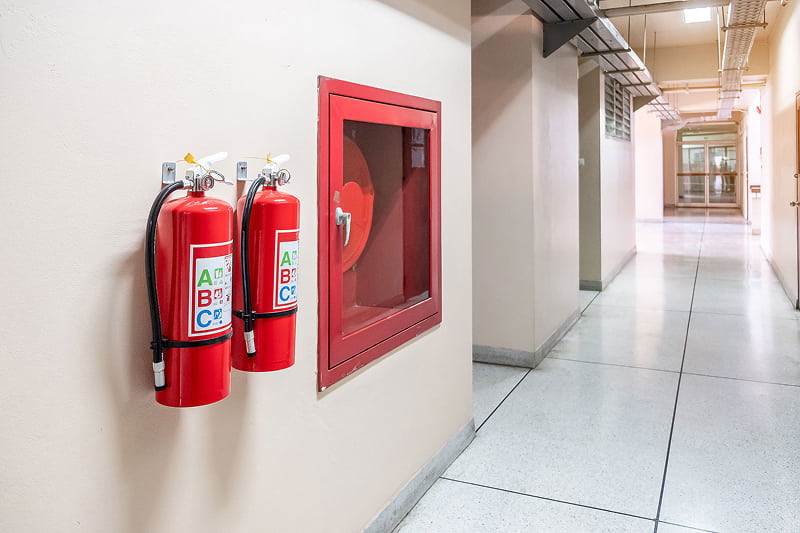
This is where HMO fire regulations meet your insurance. Most HMO policies assume the property meets legal standards. Some include specific conditions, such as keeping the alarm system maintained or holding a valid licence.
After a fire, the loss adjuster will ask direct questions. Was there a working alarm? Did the fire doors have closers? Can you show your risk assessment and test records? Weak answers can lead to a reduced or refused claim.
The Insurance Act 2015 gives landlords some protection. An insurer cannot use a breach of a risk-reducing term to refuse a claim if you can show the breach could not have increased the risk of the loss that happened. But a faulty alarm or a broken door closer is usually directly relevant to a fire, so this protection may not help you.
The courts have shown how costly this can be. In one case decided before the Act applied, a hotel destroyed by fire had a claim of almost £1.75 million refused because the owner had broken a policy term requiring regular electrical testing.
There is a wider cost too. Breaching the HMO management regulations can now bring a civil penalty of up to £40,000 per offence. If a tenant is injured, you could also face a compensation claim, which is where landlord’s liability cover becomes essential.
Disclosure matters just as much. If your insurer does not know the property is an HMO, or how many people live there, the problem can go far beyond one refused claim. That is why specialist HMO insurance, with the property described accurately, is worth getting right. Misdescribed risks are also among the most common reasons behind denied landlord claims.
Safer Tenants, Stronger Cover: Your Next Steps
HMO fire regulations come down to four things:
- An alarm system that warns everyone, wherever the fire starts
- Fire doors that close, seal and stay shut
- An escape route that stays clear and protected
- A written fire risk assessment that you keep up to date
Get these right and keep good records, and you protect your tenants, your licence and your ability to claim. Start by checking your property against your local council’s HMO standards, then read your policy for any conditions linked to fire safety. Our 2026 HMO guide covers the other insurance issues landlords are facing this year.
Goldcrest has been helping landlords protect their properties since 1975. If you would like an experienced broker to check that your cover matches how your HMO is actually run, request a call and we will talk it through with you.